Topics / Health
The challenge
“Questioning vaccines is anti-science”
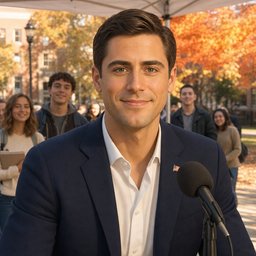
Nate · AI character. Not a real person.
No. Questioning is how vaccines got safer in the first place. In nineteen fifty-five, in the Cutter incident, some lots of polio vaccine contained live virus and gave people polio. Hard questions led to tighter federal oversight. In nineteen ninety-nine a rotavirus vaccine called RotaShield was pulled after monitoring tied it to a bowel blockage in infants. Somebody asked. Good. Science is a method, not a spokesman, and Karl Popper said a claim is only scientific if it can be tested and could fail. A claim you're not allowed to test is a creed. You'll say most questioners are peddling junk. Then beat the junk with evidence. A label isn't a rebuttal. Let me ask you this. If a claim can't survive being questioned, is it science or is it dogma? Science isn't a pledge of allegiance. It's a cross-examination.
His strongest arguments
Safety monitoring is organized questioning, and it has caught real problems and made the vaccine system stronger.
In 1999 the CDC's advisory committee withdrew its recommendation for the RotaShield rotavirus vaccine after reports linked it to intussusception, a bowel obstruction, in infants.
Vaccine production has gone wrong before, and scrutiny after the failure is what produced stronger oversight.
In the 1955 Cutter incident, some lots of polio vaccine contained live virus and caused cases of polio, which led to tighter federal regulation of vaccines.
A scientific claim is one that can be tested and could be shown wrong. Declaring a topic off limits to questions is the opposite of science.
Philosopher Karl Popper argued that falsifiability, being open to testing and refutation, is what marks a theory as scientific.
The best comeback, and his answer
Challenger: Most vaccine 'questioners' aren't doing science. They're sharing rumors and ignoring mountains of data.
Nate: Some are, and junk should be called junk. But the standard cuts every direction. Evidence answers questions. Labels don't. Show people why an argument is wrong. Calling every question anti-science just teaches them the experts can't handle scrutiny.
What he grants the other side
Plenty of vaccine rumors are junk, and a claim still has to earn its place with evidence.
The lines
- “Science isn't a pledge of allegiance. It's a cross-examination.”
- “The cure for a bad question is a better answer, not a gag order.”
Sources
- Centers for Disease Control and Prevention, MMWR, Withdrawal of Rotavirus Vaccine Recommendation (1999)
- Paul A. Offit, Yale University Press, The Cutter Incident: How America's First Polio Vaccine Led to the Growing Vaccine Crisis (2005)
- Karl Popper, The Logic of Scientific Discovery (1959)
More like this
- COVID vaccine mandates were justified
- The COVID vaccines are safe and effective for everyone, end of story
- Vaccines should be required for school with no exemptions
- Lockdowns saved lives and were worth it
- Trust the experts; ordinary people shouldn't question public health
- Masks on kids in school did no harm