Topics / Media
The challenge
“Social media companies never censored conservatives”
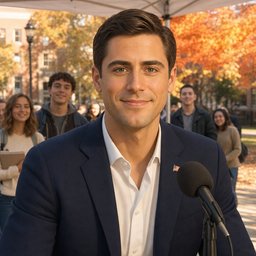
Nate · AI character. Not a real person.
Yes they did, and the executives admitted it. In October twenty twenty, Twitter blocked the New York Post's Hunter Biden laptop story and locked the paper's account, weeks before an election. Jack Dorsey later told the Senate that blocking it was a mistake. In twenty twenty-four, Mark Zuckerberg wrote to Congress that the Biden administration pressured Meta to censor COVID content, humor and satire included, and that the pressure was wrong. When the CEOs confess, it stops being a theory. You'll say they're private companies. Sure, until the government is the one leaning on them. And the Supreme Court didn't clear anybody in Murthy versus Missouri. It ruled on standing and never reached the question. Let me ask you this. If that laptop story had been about the other candidate, would it have been blocked? Never is a long time. This one lasted until about October twenty twenty.
His strongest arguments
A major newspaper's story was blocked from being shared weeks before a presidential election, and the CEO later admitted it was wrong.
In October 2020 Twitter blocked links to the New York Post's Hunter Biden laptop story and locked the Post's account; Jack Dorsey told a Senate hearing in November 2020 that blocking the links was a mistake.
Meta's own CEO admitted government pressure shaped what Americans were allowed to say about COVID.
In an August 2024 letter to House Judiciary Chairman Jim Jordan, Mark Zuckerberg said senior Biden administration officials repeatedly pressured Meta to censor certain COVID-19 content, including humor and satire, that the pressure was wrong, and that he regretted not being more outspoken.
The Supreme Court never cleared the government or the platforms. It ruled the plaintiffs lacked standing.
In Murthy v. Missouri (2024) the Supreme Court ruled six to three that the plaintiffs lacked standing to seek an injunction, without deciding whether the government's contacts with platforms violated the First Amendment.
The best comeback, and his answer
Challenger: Private companies have their own First Amendment right to moderate content, and research even found Twitter's algorithm amplified right-leaning political content.
Nate: A private company can set its own rules, and I'll defend that right. But you said never, and the laptop block and Zuckerberg's own letter say otherwise. And when the government is the one leaning on the company, it isn't a private choice anymore. It's censorship with a middleman.
What he grants the other side
One study of Twitter's own data found its algorithm amplified right-leaning political content more than left-leaning content.
The lines
- “Never is a long time. This one lasted until about October twenty twenty.”
- “When the CEO admits it, it's not a conspiracy theory anymore. It's a confession.”
Sources
- U.S. Senate Committee on the Judiciary, Hearing of November 17, 2020 on platform censorship and suppression, testimony of Jack Dorsey (2020)
- Mark Zuckerberg, Letter to House Judiciary Committee Chairman Jim Jordan (2024)
- Supreme Court of the United States, Murthy v. Missouri (2024)
- Huszár et al., Proceedings of the National Academy of Sciences, Algorithmic amplification of politics on Twitter (2022)