Topics / Health
The challenge
“Vaccine makers should keep their liability protection”
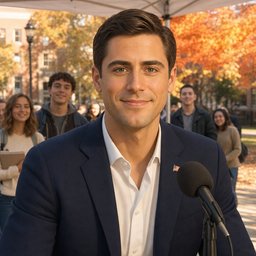
Nate · AI character. Not a real person.
No. No other industry gets this deal, and vaccine makers shouldn't either. Under the nineteen eighty-six Vaccine Injury Act, most injury claims go to a special federal program instead of a jury. In Bruesewitz versus Wyeth, the Supreme Court said that law blocks design-defect lawsuits outright. COVID shots got an even bigger shield under the PREP Act, and that's the same product line where the FDA added heart inflammation warnings in June of twenty twenty-one. You'll say lawsuits chased makers out of the market in the eighties. So keep a compensation fund for families, and reopen the courthouse door for real negligence. Let me ask you this. Name one other product the government pushes on you whose maker you mostly can't sue. If it's safe, it can stand trial. Confidence doesn't need a force field.
His strongest arguments
Take away the lawsuit and you take away one of the strongest reasons a company has to pick the safer design.
In Bruesewitz v. Wyeth, the Supreme Court held that the 1986 Act preempts state-law design-defect claims against vaccine manufacturers.
COVID shots got an even stronger shield than childhood vaccines, on a product millions of workers were ordered to take.
The PREP Act lets the HHS Secretary declare countermeasures immune from most liability, and the COVID declaration covered the vaccines. Injury claims go to the separate Countermeasures Injury Compensation Program instead of court.
Rare side effects are still real. Informed consent means a real remedy when the harm lands on you.
In June 2021 the FDA added warnings about myocarditis and pericarditis to the fact sheets for the mRNA COVID vaccines.
The best comeback, and his answer
Challenger: Congress passed the 1986 law because lawsuits were driving manufacturers out of the vaccine market and threatening supply. Remove the shield and you invite shortages.
Nate: Congress answered a broken lawsuit system with near-total immunity, and that's the wrong trade. Keep the no-fault fund so families get paid fast. Then let a judge and jury hear real negligence and bad design, the way they do for every other product. Companies should compete on safety, not hide behind a statute.
What he grants the other side
Lawsuits in the nineteen eighties really did threaten the vaccine supply, which is why Congress acted.
The lines
- “Confidence doesn't need a force field.”
- “If it's safe, it can stand trial.”
Sources
- U.S. Congress, National Childhood Vaccine Injury Act of 1986, Public Law 99-660 (1986)
- Supreme Court of the United States, Bruesewitz v. Wyeth LLC (2011)
- U.S. Congress, Public Readiness and Emergency Preparedness Act, Public Law 109-148 (2005)
- U.S. Food and Drug Administration, Myocarditis and pericarditis warning added to mRNA COVID-19 vaccine fact sheets (2021)
More like this
- COVID vaccine mandates were justified
- The COVID vaccines are safe and effective for everyone, end of story
- Vaccines should be required for school with no exemptions
- Questioning vaccines is anti-science
- Lockdowns saved lives and were worth it
- Trust the experts; ordinary people shouldn't question public health