Topics / Health
The challenge
“Vaccines have nothing to do with autism, so stop asking”
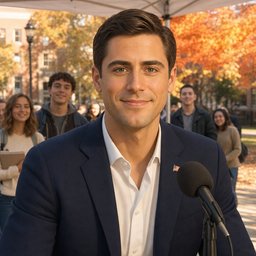
Nate · AI character. Not a real person.
Half right, and the second half is the problem. The big studies have not found a link. A Danish study followed more than six hundred fifty thousand children and found no higher autism risk in the ones who got the measles, mumps and rubella shot. But stop asking is not science. It's a gag order. Parents are looking at a childhood schedule that covered seven diseases in the early eighties and covers more than twice that now. And under a nineteen eighty-six law, most injury claims go to a federal program instead of a courtroom. Asking is homework, not heresy. You'll say questions scare people away from shots. Hiding the ball scares them more. Let me ask you this. Who do you trust more, the doctor who shows you the data or the one who says quit asking? Good science answers questions. It doesn't ban them.
His strongest arguments
State the evidence straight: the large studies have looked and have not found a link. Respecting parents starts with telling them that.
Hviid and colleagues followed more than 650,000 children born in Denmark and found that MMR vaccination did not increase the risk of autism, including among children with risk factors for it.
The schedule has grown a lot in forty years. A parent who asks what each shot is for is doing exactly what informed consent means.
The CDC's 1983 childhood schedule covered seven diseases: diphtheria, tetanus, pertussis, polio, measles, mumps and rubella. The current schedule covers more than twice as many.
Congress wrote information for parents into the law itself, and it moved most injury claims out of ordinary courts. People who can't easily sue are owed open data.
The National Childhood Vaccine Injury Act of 1986 created a no-fault federal compensation program for vaccine injury claims and requires that vaccine information materials be given to families before a dose.
The best comeback, and his answer
Challenger: Every time someone raises this, vaccination rates drop and measles comes back. The question itself is what hurts kids.
Nate: Measles is real, and that's exactly why trust matters. You don't build trust with a mandate and a muzzle. You build it by handing a mother the study and answering her out loud. A parent who gets a straight answer is a lot calmer than one who gets told to stop asking. Persuade people. Don't force them.
What he grants the other side
Large published studies have found no link between vaccines and autism.
The lines
- “Good science answers questions. It doesn't ban them.”
- “Asking is homework, not heresy.”
Sources
- Hviid, A. et al., Annals of Internal Medicine, Measles, Mumps, Rubella Vaccination and Autism: A Nationwide Cohort Study (2019)
- Centers for Disease Control and Prevention, Recommended childhood immunization schedules, 1983 and current (2024)
- U.S. Congress, National Childhood Vaccine Injury Act of 1986, Public Law 99-660 (1986)
More like this
- COVID vaccine mandates were justified
- The COVID vaccines are safe and effective for everyone, end of story
- Vaccines should be required for school with no exemptions
- Questioning vaccines is anti-science
- Lockdowns saved lives and were worth it
- Trust the experts; ordinary people shouldn't question public health