Topics / Free speech
The challenge
“The government asking platforms to remove posts isn't censorship”
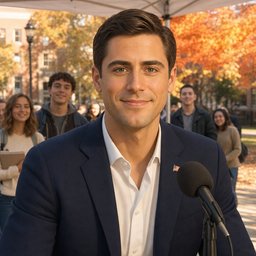
Nate · AI character. Not a real person.
Yes it is. When the government leans on a private company to silence speech it can't ban itself, that's censorship with a middleman. The Supreme Court said so in Bantam Books versus Sullivan in nineteen sixty-three, and said it again, unanimously, in N R A versus Vullo in twenty twenty-four: officials can't coerce private parties to suppress speech they dislike. And this isn't theory. That same year Mark Zuckerberg wrote Congress that senior Biden administration officials repeatedly pressured Meta to censor certain COVID content, including humor and satire. You'll say Murthy versus Missouri went the government's way. It did, on standing. The Court never said the pressure was constitutional. Let me ask you this: when the request comes from the people who regulate your business, is it really a request? A suggestion from someone holding your license isn't a suggestion.
His strongest arguments
The government can't do through a middleman what it's forbidden to do directly. Pressuring a company to suppress speech is still suppression.
In Bantam Books v. Sullivan (1963), the Supreme Court struck down a state commission's system of informal notices pressuring book distributors to stop selling disfavored books, calling it a system of informal censorship.
The line is between persuading and coercing. When the one asking holds power over your company, the ask comes with a threat nobody has to say out loud.
In National Rifle Association v. Vullo (2024), a unanimous Supreme Court held that government officials cannot coerce private parties in order to punish or suppress speech the government disfavors.
This isn't hypothetical. The head of one of the biggest platforms on earth said the pressure happened and that he regrets not speaking up sooner.
In an August 2024 letter to the House Judiciary Committee, Mark Zuckerberg wrote that senior Biden administration officials repeatedly pressured Meta's teams for months to censor certain COVID-19 content, including humor and satire.
The best comeback, and his answer
Challenger: The Supreme Court looked at the COVID case in Murthy v. Missouri and ruled for the government, so the courts have already said this wasn't censorship.
Nate: Murthy was decided on standing. The Court said those plaintiffs hadn't shown their own posts came down because of the government. It never ruled the pressure was constitutional. Vullo, decided the same term, said plainly that coercing private parties to suppress speech violates the First Amendment.
What he grants the other side
The government is allowed to speak and persuade, and the Murthy plaintiffs did lose at the Supreme Court.
The lines
- “A suggestion from someone holding your license isn't a suggestion.”
- “Censorship by proxy is still censorship.”
Sources
- U.S. Supreme Court, Bantam Books, Inc. v. Sullivan, 372 U.S. 58 (1963)
- U.S. Supreme Court, National Rifle Association of America v. Vullo (2024)
- Mark Zuckerberg, Letter to House Judiciary Committee Chairman Jim Jordan (2024)
- U.S. Supreme Court, Murthy v. Missouri (2024)